
"How people, places and technology come together for optimising employee experience"
By Lewis Barker, Director of Workplace Services EMEA at ServiceNow
The world of work is ever changing: People are increasingly driven by flexibility and purpose. The places we work are becoming more important than ever, people desire autonomy to carry out their work where it suits them best. And finally, the functionality of the workplace is being brought into question as technology continues to advance at a rapid pace – influencing the way we work.
And it’s these three pillars (People, Place & Technology) that — when aligned properly — will optimise employee experience, which is vital not just for talent retention and wellbeing, but also for running a smooth workplace in general. In fact, Gallup research shows a good company culture and highly engaged employees can lead to a 41% reduction in absenteeism and a 17% increase in productivity.
Put simply, businesses need to understand that improving performance in general relies on boosting the employee experience. So how can organisations set up places and technology to support and change with flexible demands?
The challenges of coming together
It’s no wonder that every company right now is assessing their approach to both people and place. The war for talent and the Great Resignation means a seamless experience wherever people work is important as ever. Enabling flexible working and work/life balance is crucial. Businesses need the tools to support this so talent can be retained and attraction improved.
In terms of place, companies now manage teams in distributed geographies and locations. Before, the physical workplace had a monopoly —employees felt they had no choice but to come into the office. But now, we must tie into the flexibility of employees. Yes, remote working has become integral to the working world, but there is still value in bringing people together in person – especially when it comes to collaboration, purpose and culture. Spaces must represent a worthwhile experience and suit the needs of the workforce for this to be acknowledged.
It’s clear employee demands are constantly changing, so technology has to be agile enough to keep up. Organisations need to put the right digital tools in place to create a complete experience and provide the data to adapt to requirements.
Using technology to optimise employee experience
Technology can be the thread between these three pillars that allows employee experience to be seamless and enables businesses to become what I like to call ‘employee experience organisations’. It's something we have achieved here at ServiceNow.
Our Workplace Service Delivery (WSD) software allowed us to glean data from our reservation tool, visitor management solution and work order management to begin to see how our spaces were being used. Now, we can look at how many people are going in and make decisions from real time information on how employees use different types of spaces through the workplace app.
In tandem with our badging data, it begins to show how our spaces will adapt to future working positions and enable us to carry out New Ways of Working pilots in different locations. We can test our plans and see whether these changes add value to the experience and productivity of our workforce.
Importantly, access to this performance data from our software allows us to adopt intentional design across our offices. No longer can you sit still and not adapt your spaces to create valuable experiences. Among organisations that create intentional places for high-level collaboration, 75% also report having high levels of team innovation. Access to informed, real-time data from WSD enables us to act accordingly and reap the rewards of productivity.
What this also means is we can implement intuitive technology that understands how to best meet the needs of employees. Namely, the Now Mobile app is designed to ensure they have the optimal experience.
As the vast majority of our employee base have been remote working since the pandemic, it can be hard to know what space is best for them. The app will be looking at different categories such ‘focus’ and ‘collaboration’ that recommends places based on purpose.
Being presented with the right environment is much more effective than having to search for it. Think of Spotify for example – ‘I want concentration music’ – the Now Mobile app works the same way. It removes hurdles so that employees can maximise productivity.
For example, when selecting collaboration, the app can show you other people in your team that have also booked into your office and will propose spaces near them. It’s another feature that aids better teamwork and purpose, with intentional options to provide a valuable experience and once again enhance productivity.
The future of the working world
Ultimately, a person should have the freedom of choice when it comes to the way they work, which has a direct influence on both place and technology. Aligning a vision between people, place and technology will have a positive impact on productivity and collaboration. That’s what has enabled ServiceNow to be an employee experience organisation.
Going forward for us, it’s about continuing to collect and build data sets for each of these pillars with agile technology to support everchanging employee demands. Always making sure people can work at their best and thrive will enable a business to do the same.
By using our technology internally to support the future of work, we can understand how it translates to helping our customers to become employee experience organisations.
To find out more about how ServiceNow can deliver solutions to enhance employee experience, visit: https://www.servicenow.com/uk/solutions/employee-experience.html

Speakers Q&A: How have you been using sustainable products and implementing sustainable designs in their offices?
Cristiano Testi, Principal Director at tp bennett
The embodied carbon of materials contributes to at least 40% of a building’s total carbon footprint – for offices this can be as much as 60-70% (World Green Building Council, 2021), meaning that nearly two thirds of its carbon footprint can be ‘blown’ before the first user switches on the first light.
As an international design practice, the materials we specify are both our most significant environmental impact, and our greatest opportunity to achieve positive change!
However, true “sustainability” should consider more than just environmental factors – and must also focus upon social interfaces; most notably for those working in higher-risk supply chain manufacturing processes.
To bring together all elements of sustainability, tp bennett has developed AD-Lib; a responsible sourcing product library, enabling our colleagues to make informed decisions when specifying materials.
Claire Henderson, Inclusive Design Lead, Workplace Design at HMRC
HMRC, as a UK Government body, has a responsibility to ensure we are a considerate client and as such our Locations Programme has very much driven a sustainable agenda from day 1, local procurement is always our preferred route, we seek innovative products made from recycled materials as well as longer lifecycle products to reduce the need to regularly replace. This is also something we ensure all of our suppliers have embedded in their processes so that it flows down the supply chain and hopefully drives a change throughout the industry.
Consideration to how we ensure the ongoing operation of our buildings is sustainable is also high on our agenda, for example how we can drive better waste management and user behaviours around recycling through design as well as thinking about how our building management systems can drive energy efficiencies.
Paula Rowntree, Head of Workplace Design at Lloyds Banking Group
Sustainability is a core of our strategy as a business so how we design with sustainability at the heart is front and centre for us. Our supply chain is encouraged to bring new, innovative products to our attention and we regularly run an Innovation Dragons Den with our Sustainability team to encourage companies to share with us what they are doing – clearly this is a space where innovation and creativity is driving lots of fantastic initiatives to improve the basics of heating and lighting systems as well as innovation in furniture and biophilia. Driving to net zero is a minimum standard we are setting ourselves.
Natasha Hewlett, Senior Project Designer at Peldon Rose
As designers we should be questioning every product choice we make, designing out waste wherever we can and thinking about the entire life cycle of each and every specified item. Sustainable design also encapsulates how flexible and adaptable a workspace can be as well as what material is chosen for a worktop, for example. Reducing waste (and therefore carbon) is important on any fit out and there are many ways this can be achieved - from flooring take back schemes to furniture reuse/rental offerings. Sustainability should be on the forefront of every supplier and installers mind too, connecting the entire chain from design to build and then throughout the entire products life cycle.
Naomi Sakomoto, Senior Associate, Gensler
As architects and designers, we have a mandate to inspire and deliver stepwise change in response to the climate crisis. The success of our 2030 commitments relies on the work we design and deliver today. Each of us must begin by upskilling ourselves and recalibrating our concept of good design in the context of the environmental challenge we face. We must collaborate with our clients to establish audacious goals that tell a unique story about the site, the values, and their brand. We must collaborate across the value chain to bring this vision to reality, from consultants and manufacturers to start-ups and universities, to bring new technologies to market. Every project is an opportunity to pivot from architecture that does less harm, to architecture that restores the environment around us.
Speakers Q&A: What type of products are you looking forward to seeing at the Workspace Design Show?
Claire Henderson, Inclusive Design Lead, Workplace Design at HMRC
Given the change in the way we use the office now I’m keen to see some modular products that help us create collaborative spaces whilst protecting future flexibility, and of course, being inclusive for all. The increased focus on neurodiversity across society also offers designers/manufacturers the chance to show something innovative and I would be really keen to hear how they have sought and built on user feedback to develop products which truly offer something different.
Technology is also a key interest for me, how can we use that to support all building users to have the best experience possible?
Lewis Barker, Director, Workplace Services EMEA at ServiceNow
Data capture technology – the workplace needs good and accurate data as we test and iterate designs within our spaces. There is a lot of experimentation that needs to happen.
Employee Experience engagement platforms – Ensuring a seamless experience when going to a physical workplace is important. If you take away the friction with booking spaces, catering etc then it is one less hurdle for your employee base not to interact with at the workplace.
Speakers Q&A: What measures should designers and employers be taking to promote employee wellbeing?
Steve Brewer, Founding Partner at Burtt-Jones & Brewer
Using words like ‘inclusivity’ or ‘diversity' is fine. Everyone has a right to be able to choose how, what and where they work from, especially once in the workplace. Designing in ‘wellness’ rooms, referring to planting as ‘biophilic’ design is a also positive. Labelling a room as the ‘wellbeing’ room, separate from the main workspace certainly has merit but is not the panacea. The key to getting this right, from my perspective, is to answer the human, experiential, questions first. If you do build a wellbeing room, what goes into it, where is it located, is it discrete and quiet, how easy is to access, has it got a view, when can it be used, who has control of booking it, how do you know if it’s being used?
Culture eats strategy for breakfast as the saying goes. Get the workplace culture right and the strategy will follow, or community as I prefer to call it.
Wellbeing is holistic. All the pieces of the jigsaw puzzle need to be mapped out first, to create the company’s unique vision/picture and establish a place for wellbeing within the culture. This isn’t just about the workplace, it’s about before and after people arrive at the office and for those working remotely. Wellbeing isn’t just a well appointed room in the basement.
Tina Norden, Partner at Conran & Partners
Wellbeing has thankfully become a key word outside the spa and it is understood how important it is for productivity and positivity of the team. It encompasses all elements of life and all senses, so there is much that a workplace can do to improve the wellness of their team.
Lighting is absolutely key and can even work different at different times of the day and to circadian rhythms.
Ergonomics are often underrated, in particular in younger teams, but a good chair, a good set up for the computer all mean a happy body into the future.
And most importantly creating an environment that is conducive to team work, collaboration and flexibility in set ups to foster a social and collaborative atmosphere.
Lewis Barker, Director, Workplace Services EMEA at ServiceNow
Manager training to educate of wellness practices and providing company wide wellness initiatives. Have a baseline of wellness activities that employees can tap into, could be virtual or remote. Design spaces that are biophilic and have good air circulation and systems.
Michael Dowds, Head of Workplace Design Standards at Department for Work and Pensions
The WELL Building Standard is a good starting point. WELL Certification puts physical and mental health first by considering a wide number or factors including air quality, water, nourishment, light, fitness, comfort and mind. It can be expensive to fully implement, but much of the guidance can be incorporated in designs fairly simply just by being aware of what is possible and the kinds of things that really make a difference.
Naomi Sakomoto, Senior Associate, Gensler
Workplaces should support the complete hierarchy of physical and emotional wellbeing. Meeting the needs of a neurodiverse workforce with a range of abilities should be the baseline. The second tier of wellbeing encompasses spaces that support us as whole human beings. This includes designing for all activities that individuals may need throughout their day; places for human connection, collaboration, and movement; and places that connect us to nature and daylight. Finally, at the top are spaces that enable us to thrive, connecting us to each other, to the world, and to our sense of purpose; places that support learning and growth; and that inspire and delight us. Workplaces that deliver the top tier of wellbeing will attract and retain the best talent and empower employees to be their best selves.
Speakers Q&A: How can empathy allow future designs to attract and retain talent?
Amy Gargan, Workplace & Interiors Sector Lead, Director at RKD Architects
More and more we are understanding the diversity of employees and recognising that not everyone works in the same way. We also know that the environment we work in can greatly affect our mood, productivity, and well-being. Employers seeking to incorporate empathetic design principles in their workplace are cognisant of that diversity and strive to create an inclusive workplace that values individual differences in the workforce and makes everyone feel accepted.
Design should focus on creating a workplace which is human centric, catering to individuals, their personalities, experience, and choices in the way they work. Addressing environmental and wellbeing factors will help keep employees engaged, giving them a sense of fulfilment that will ultimately benefit employee retention.
Claire Henderson, Inclusive Design Lead, Workplace Design at HMRC
As a society we are becoming increasing aware of the diverse nature of people, we aren’t all the same and what a boring world it would be if we were! Workspace is key to supporting individuals shine, by providing the right environment, or indeed choice of environments throughout, people see that not only do employers care about them as employees but also as individuals, that comes with increased levels of engagement and retention as well as productivity.
Only by listening to a diverse range of end users will design teams truly get anywhere near providing an inclusive workspace and ultimately a change for a protected characteristic generally is something that helps others, lowered kerbs, clamshell doors, all examples of that so it’s a win win.
Claudia Bastiani, Head of Workplace Experience & Design at Legal & General
Neuroarchitecture will play an ever more significant role in the creation of future workspaces; understanding the question that we are trying to answer ie what does empathy in the design and operation of a workspace really mean? These are the sorts of interesting and sometimes uncomfortable conversations that need to be explored.
The interaction between HR, Real Estate and Technology has never been more significant. Data and the ability to pivot your thinking quickly is key to evolving strategies around employee engagement. Neuroscience will make more and more of a contribution to future strategies which might seem disruptive for some, whilst very exciting for others.
Natasha Hewlett, Senior Project Designer at Peldon Rose
I think empathic design should consider the human above everything. The needs and requirements within a workspace differ between every single person, so for employers to both attract and retain talent they have to invest in their people. Creating ‘everybody’ spaces sounds like a challenge, but by designing a workspace revolving around the human flow with flexibility in mind will do exactly that.
Quiet focus areas, dedicated collaboration zones away from the desk, high energy social spaces, but most importantly the choice of how the employee can work. These are all ways to create diverse environments that go above and beyond the basic requirements of the traditional office, giving choice and flexibility for everyone - for example introverts, extroverts, anyone with a disability or who is neurodiverse.
Speakers Q&A: What changes are you hoping to see in the UK workspaces in 2023?
Tina Norden, Partner at Conran & Partners
More variety, more flexibility and a regard to the human factor whilst retaining a professional environment. And professional doesn’t mean boring and grey, it means and environment that is conducive to the type of work being done, looks right for the sector it is ibn and promotes staff wellbeing.
It is easy to forget that working on a sofa or a badly set up desk can actually be very harmful to our wellbeing, so designing spaces with character and personality that actually work will be real progress.
Claudia Bastiani, Head of Workplace Experience & Design at Legal & General
For 2023 and beyond, I am interested in exploring design that is truly inclusive and sustainable, so catering for neurodiversity, the not so obvious physical disabilities such as challenges with hearing and sight, spaces for community that cater for all and true carbon calculation. What will differentiate a great workspace from an outstanding workspace will be inclusivity and sustainability.
Both interesting subjects are ever evolving so understanding what the current thought is around these will be interesting, as well as understanding the current challenges. We find ourselves in a situation where for the first time we have a very informed audience (the workforce) so not being engaged in evolving your thinking on this is no longer an option.
Lewis Barker, Director, Workplace Services EMEA at ServiceNow
More climate and sustainability focused spaces – our company has commitments we need to make alongside other companies and as Real Estate is a massive polluter, it’s within all our control to help solve this issue.
Flexible and adaptable spaces – simply put we need to experiment and having flexible spaces allows this experimentation to happen. We’d still need to ensure quiet and solo working spaces, but these can also be flexible in nature too.
Claire Henderson, Inclusive Design Lead, Workplace Design at HMRC
Post pandemic return to the office has seen us all think about our work environment differently and that is even more evident in the recent generation of recruits where going to an office is about more than just a space for a desk, it’s about all the wellbeing benefits which come with that.
We were already on that path pre-pandemic but the change in behaviours has been accelerated and I hope 2023 sees more of us adopting that behaviour and making the most of fantastic workspaces that are out there, and of course we need to ensure we have designs and products to meet that challenge!
Speakers Q&A: How do you see flexibility being implemented in offices to maximise the use of real estate and improve the employee experience?
Paula Rowntree, Head of Workplace Design at Lloyds Banking Group
At a personal level I am curious about how we can blend more retail design thinking in our office space; retail is constantly reinventing itself and designs for low cost/modular/flexible environments. If I know nothing I know that change is a constant in today’s world so bringing more of this retail way of thinking/designing is something I am exploring.
Scott Rominger, Creative Director at WeWork
Work trends continue to evolve as businesses put their right foot forward and employees figure out what they need and want from the office going into 2023. As a result, companies must embrace flexibility on all levels to adapt to new demand, and spaces must be reconfigurable as this demand evolves. At WeWork, flexibility is at the core of our business – particularly in our design approach, where we adapt and enhance our spaces depending on our members’ varying needs. For example, in large offices, we used to provide 10% lounge space and now we are seeing the need for 50-60%collaboration and lounge space.
We’re also seeing increased demand for dedicated, focused areas. What’s become clear is that as the criteria for the modern office evolves, flexible design solutions that can be adjusted in a few weeks rather than in a few months will be table stakes’ for any operator as we head into 2023.
Natasha Hewlett, Senior Project Designer at Peldon Rose
By creating flexible workspaces, employers can cater to a diversity of needs whilst maximising the real estate. We are seeing more multi-purpose spaces being designed, for example social areas that can be adapted into town hall spaces. Two very useable zones utilising the same amount of real estate by considering the flexibility of the furniture, as well as the technology and AV solutions.
The ability to ‘plug and play’-that is to work from chargeable devices comfortably in your desired location - is so important when creating multi function spaces. If the furniture can flip, fold and move out of the way with ease and AV can be adapted easily then employers can maximise real estate whilst giving their employees the workspaces they need.
Steve Brewer, Founding Partner at Burtt-Jones & Brewer
Multi-tenanted buildings will need to offer more to legacy and prospective tenants, it’s no longer good enough to just offer great showers, upscale changing spaces, plenty of lockers and bicycle parking. With many high rise office buildings occupied by businesses from various sectors, demands are becoming multiple and diverse, extending far beyond what would originally have been considered core business needs. New developments have been adding communal gyms, bike parking, showers etc for years. It is now about experience, not just facility. The demand is for spaces that need to flex more, where an entire area of site, floor or group of floors are assigned as a shared space for tenants to flex and grow. For example, this could be a short or mid term project rooms with dedicated workspaces for tenants looking to incubate new business ideas, or a dedicated, informal environment for external tenants to mix and collaborate with building users, curated with a specific agenda to engage in creative workshops and sessions to directly and indirectly foster innovation. The key being to enhance the experience, not just the facility. These new spaces should be viewed as collateral to the tenant offer, as a void to fill, providing value as a service, not as an overhead and operational cost.
In terms of how to improve the experience within individual workspaces, employees are being given a new level of personal autonomy. The Covid experience has enabled them to have a voice in the discussion about what the workspace becomes and how it should be shaped, taylorism if you like. Where small enhancements can be made to better an individual’s needs and wellbeing at a fundamental level, such as direct control of lighting, comfort at the desk or work setting.
Tina Norden, Partner at Conran & Partners
Flexibility in the workplace is very important but also very hard to get right. Whilst most offices are driving towards flexible workspace, most employees actually like having their own desk, with their team and their things around them.
If flexible desks are key, bringing in personal touches like a trolley for personal items that can be stored and brought along, can help to still create that sense of place.
Flexibility is also important on a closer level, bringing variety into the desk set up.
The height of the desk and chair, using a chair or not, how the computer is set up and even lighting moods – allowing the team to customise these will give flexibility and will promote satisfaction and wellbeing.
Lewis Barker, Director, Workplace Services EMEA at ServiceNow
I see prescribed team days in offices. Certain events can be hosted in physical spaces as default – a prescribed matrix of what happens in office vs at home vs 3rd space. Working hours won’t exist – use the space at all times, if that what works for the individual.
Speakers Q&A: What are the most important considerations for employers when creating spaces where people really want to be?
Michael Dowds, Head of Workplace Design Standards at Department for Work & Pensions
You need to really know your people. Take every opportunity to bring the various teams using a space on the design journey with you. Help them reimagine how they could carry out their work in different settings to achieve better outcomes. Encourage creativity, imagination, collaboration appropriate for those using the space.
Most people don’t naturally default to a smarter way of working. Help your people understand how the workplace has been designed with them in mind, and how to make best use of the various work settings. Review the workplace with your people after a period of time to help keep things fresh, appropriate and to continue the journey together.
Lewis Barker, Director, Workplace Services EMEA at ServiceNow
Event spaces to host large meetings ranging from a hour, to a day to a couple of days. Also seamless technology embedded in the designs to ensure a great employee experience. Finally hospitality focus from the workplace teams equals personalised experiences that the employee base remembers and wants to come back to.
Tina Norden, Partner at Conran & Partners
In our post-Covid WFH world our ambition is to design spaces that make people want to come to the office and actually be there on an (almost) daily basis. The new flexibility is amazing and a real game changer, but it is easy to forget how much enjoyment a good and professional working environment can bring.
Key considerations are now to actually set the workplace apart from home functionally whilst creating environments people like being in. Lighting is key, ergonomics of chairs and table, flexible height desks – and spaces where the team can come together for meetings and socials. All things that are very hard to recreate at home!
Steve Brewer, Founding Partner at Burtt-Jones & Brewer
To create a place first and foremost, and not a space. Build in staff engagement at the offset. Allow time to listen, to have their input, the brief building process at the start of the project is almost always the part of the project that is easy to compress, but is the part of the project where you learn most, it will define the project. Discuss what your employees are willing to compromise on early too. We’d all love everything to be just as I want it, but that may not be the same as you would like it. Your employees will understand this. Clear, open, timely and transparent communication is vital. Treat the problems and subjective and objective. What is best for you, and your team, the wider business needs and the planet. The employer has to listen, allow a degree of, taylorism (there’s that word again). Always respond to every idea, no matter how daft, crazy or pointless. Show that you listened and responded. Embedding your staff into the process will pay dividends. They will own the project. Co-design it with them, not for them.
Natasha Hewlett, Senior Project Designer at Peldon Rose
Today’s offices need to deliver something special and should be so much more than just a place to work; somewhere that encapsulates the purpose of a business, provides space for connection, collaboration and bring the best out in their people. A true destination workspace considers the needs of the employee as an individual and caters for everyone, which is a delicate balance of designing for their priorities and needs.
One reason we are seeing staff coming into the office is for the social aspect, so employers have been more invested in creating those spaces and showing the employees are trusted to utilise every aspect of the workspace. Having had our home comforts at our fingertips in recent years while working from home, businesses now need to ensure that they are mimicking this in the workplace.
Claudia Bastiani, Head of Workplace Experience & Design, Legal & General
Looking forward to seeing whether what we thought were the key factors for a high performing workspace before the pandemic; have these changed with the key shifts that the more general population have come to realise? We have followed the Hospitality sector for the last 20 or so years in creating ‘experiences’ and placemaking, insistent upon work/life balance and creating workspaces that support both. Generally our workspaces now cross at least two different places each week; do we need to change our design thinking?
Amy Gargan, Workplace & Interiors Sector Lead, Director at RKD Architects
Undoubtedly the focus now for employers is to provide a workplace that offers so much more than what their employees can experience working remotely. Their reason for coming to the office is no longer one of routine or a sense of obligation, but rather it is purpose driven and the workplace must respond by tailoring itself to meet the needs of the individual.
This means a curated office landscape that offers a variety of intuitive work settings that fulfil the individual’s requirements providing for ultimate flexibility and productivity. The experience when in the workplace should be seamless – from booking a desk or reserving meeting space, to knowing who and when other team members will be there.
The employee who is removed from the office for part of their working week comes there seeking a sense of belonging and therefore it is incumbent upon the employer to create an environment which not only enables their employees to work in the most effective way possible, but also embodies their culture and values, creating a sense of community.
Scott Rominger, Creative Director at WeWork
At WeWork, we’re consistently speaking to our members to understand more about what they need and want from the modern workplace – especially as flexible working continues to take shape and office visits become more intentional, depending on working styles and tasks that need to be completed that day. With this in mind, there can no longer be a “one size fits all” approach when it comes to office design in this new era.
Instead, a workspace must be a dynamic and mixed-use space that meets the varying needs of workers. From quiet nooks, lounges and collaborative spaces to conference rooms and dedicated focus areas, at WeWork, we strike a balance between functional and thoughtful design – underpinned by flexibility. As work trends evolve, it's a combination of understanding what workers actually want, and having the flexibility to adapt seamlessly that will be key in 2023.
Paula Rowntree, Head of Workplace Design at Lloyds Banking Group
For me, the most important consideration is our colleagues and the different roles and needs they have from space, one size does not fit all. How do we create the optimum space to support both productivity and also well being and comfort in the workplace. After two years of Covid and home working we need to focus on how the Office space can provide the face to face human interaction that you simply don’t get at home; virtual is just not the same; humans are social animals with connection being vital for our health and well-being as Covid so aptly demonstrated.
Naomi Sakomoto, Senior Associate, Gensler
Today’s talent seek workplaces that combine the best of the pre-pandemic workplace, mixed with the best of the remote workplace. In broad terms, the best of the pre-pandemic workplace ingredients were:
Work: the technical infrastructure to support production;
- Play: the social infrastructure to support connection; and
- Love: the narrative infrastructure to support communication of values, impact, and purpose.
The remote workplace, despite its difficulties, brought us a few key wins:
- Flexibility & autonomy to choose when and where we work best;
- Equity for different personality types, life circumstances, and physical, neurological, and social abilities, enabled by technology;
- Convenience.
Workplaces will need to provide all of these ingredients, combined into their own recipe based on the organisation’s ways of working and unique culture.
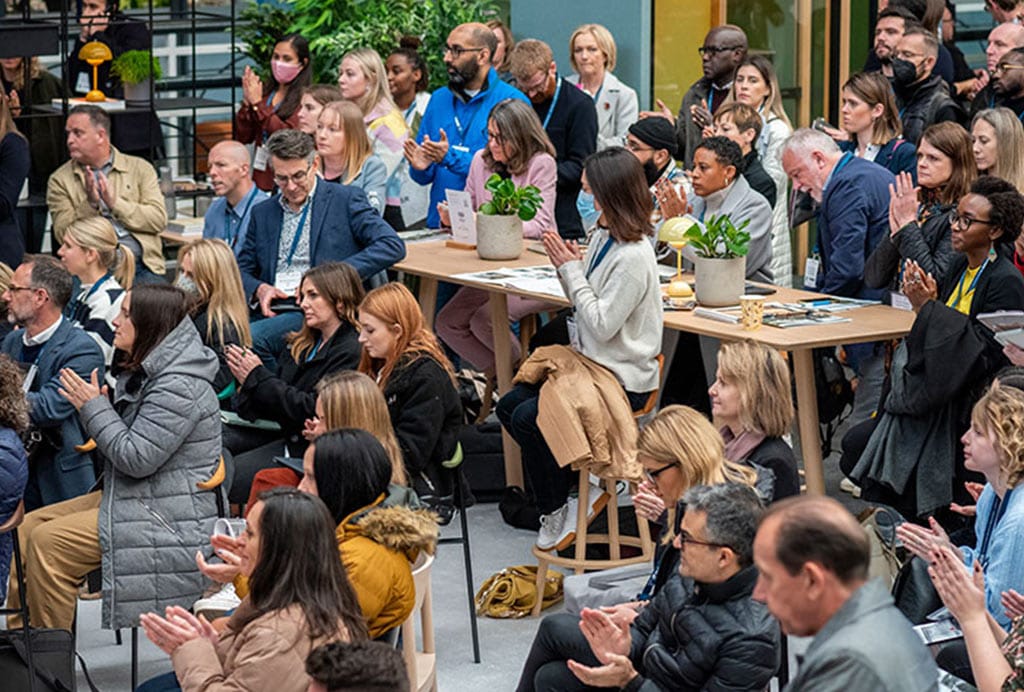
Workspace Design Show announces inspiring speaker line-up for 2023
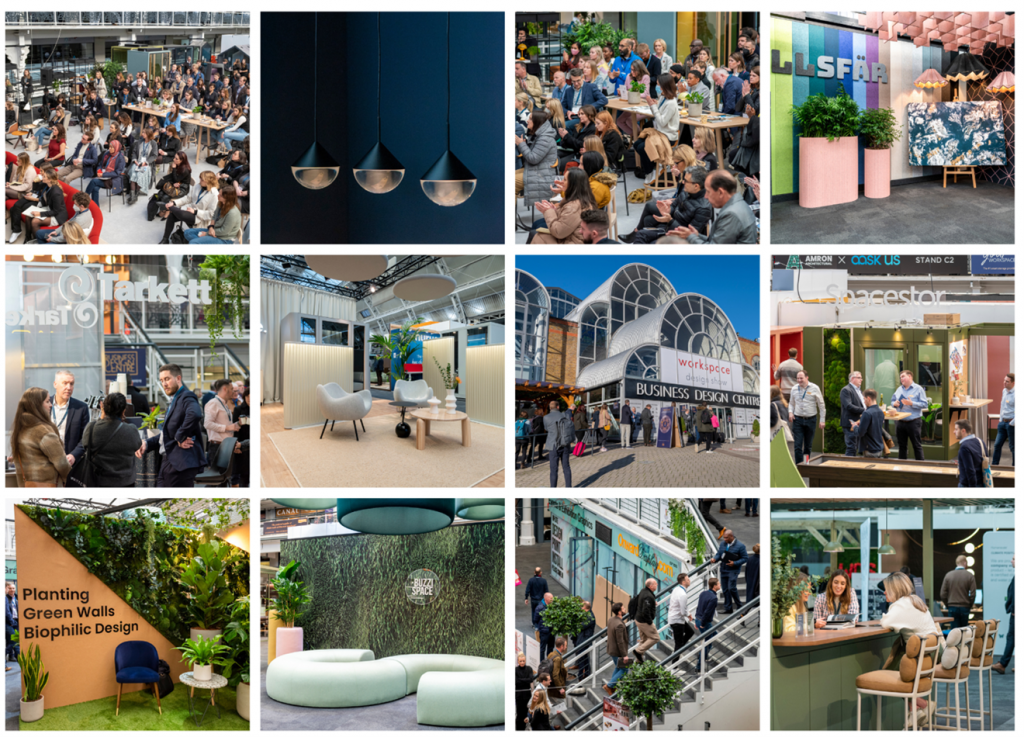
Workspace Design Show returns for the second time, unveiling an exciting speaker line-up as part of its 2023 edition. Taking place once again at London’s Business Design Centre, the show brings together the UK’s workplace interiors community to explore the experience of tomorrow’s workspaces.
The show will take place from 27- 28 February 2023, with this year’s theme being Destination Workplace: Places Where People Want To Be. One of the highlights from the inaugural 2022 edition was the Show’s talks programme, which was well received by the workplace design community.
Confirmed speakers for 2023 hail from a raft of stakeholder groups, from developers to architects and their blue-chip clients. These include architects and designers such as Collin Burry, Design Principal with Gensler; Christos Passas, Director, Zaha Hadid Architects, Katrina Kostic Samen, Director and Head of Workplace Strategy & Design, KKS Savills, and Grant Kanik, Partner, Foster + Partners. Other industry professionals speaking include Kate Smith, Executive Director, Head of Workplace Strategy at CBRE, Scott Rominger, Creative Director at WeWork, Kael Gillam, Principal Lighting Designer at Hoare Lea and June Koh, Total Workplace, Partner, Workplace Strategy Lead EMEA, Cushman & Wakefield.
International furniture specialist The Furniture Practice are curating the Talks Lounge once again this year, as well as collaborating with architectural firm BDP on the newly added talks space. The spaces are set to feature iconic brands including Vitra, Fredericia, Arper, Andreu World, and Moroso amongst others. Panel sessions will include the likes of, Ed Hoban, Associate Director and Head of Workplace at The Furniture Practice, as well as Matt Davies, Director of Sustainability.
In a series of talks, interviews and discussions, the Sustainability Works programme will bring together a selection of key figures behind the workplace market’s leading sustainable initiatives, projects and product developments. Confirmed speakers include Natalie Smith, Principal, Perkins&Will, Georgia Elliott-Smith, Managing Director at Element 4 and UN Special Junior Envoy for Youth and the Environment. Curated by Mick Jordan and the Works editorial team, it is a response to sustainability’s place at the top of the workplace agenda.
Workspace Design Show will also be hosting the Occupiers Forum - ‘The view from HQ’. Among the speakers from corporate organisations are Anita Glenn, Head of Workplace Design, AstraZeneca, Michelle Harwood, EMEA Real Estate Director, Norton Rose Fulbright LLP, Ash Kaur, Workplace Design Lead for Europe, Middle East and Africa, Oracle, and Suzan Dixon, Head of Workplace Europe & Americas, Standard Chartered. This gives visitors the opportunity to hear perspectives from current senior workplace end users, exploring the present and future demands of high-profile firms.
The Finishes and Interiors Sector Conference (FIS) will take place over both days of Workspace Design Show too. The first day will focus on the compliance and the fit-out process: creating the best possible environments to put the wow factor into buildings, while the second day will focus around creating destination workspaces: places where people want to be. Among those presenting their thought leadership are Jamesina Sainsbury, Director of Consultancy, MCM, Andrew Parkin, Partner – Global Head of Acoustics, Cundall, Vidhi Sharma, Creative Director, Future Workspaces Group.
The complete speaking programme at Workspace Design Show will cover a range of unmissable topics around workplace design and strategy featuring speakers with a diverse range of perspectives.
Workspace Design Show, 27th & 28th February 2023, Business Design Centre, London. Click here to register FREE.
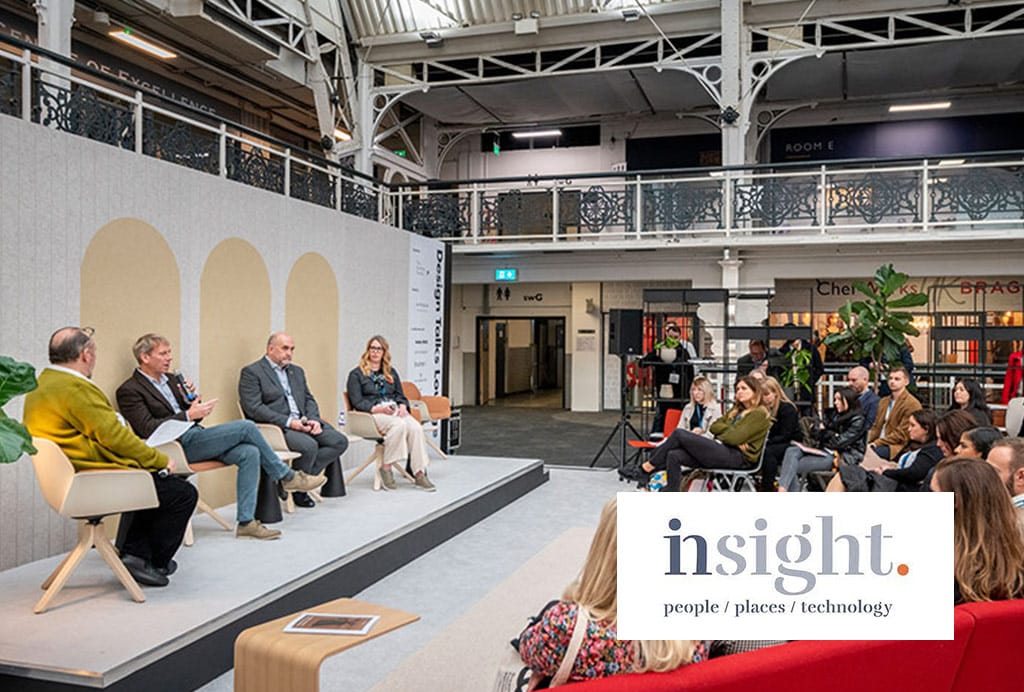
WDS 2023 speaker line-up announcement covered by Workplace Insight
Our friends over at Workplace Insight recently published an article detailing the Workspace Design Show UK's 2023 speaker line-up - an extract from which can be read below;
"The Workspace Design Show returns for the second time, unveiling an exciting speaker line-up as part of its 2023 edition. Taking place once again at London’s Business Design Centre, the show brings together the UK’s workplace interiors community to explore the experience of tomorrow’s workspaces.
The show will take place from 27- 28 February 2023, with the theme being Destination Workplace: Places Where People Want To Be. One of the highlights from the inaugural 2022 edition was the Show’s talks programme, which was well received by the workplace design community.
Confirmed speakers for 2023 hail from a raft of stakeholder groups, from developers to architects and their blue-chip clients. These include architects and designers such as Collin Burry, Design Principal with Gensler; Christos Passas, Director, Zaha Hadid Architects, Katrina Kostic Samen, Director and Head of Workplace Strategy & Design, KKS Savills, and Grant Kanik, Partner, Foster + Partners. Other industry professionals speaking include Kate Smith, Executive Director, Head of Workplace Strategy at CBRE, Scott Rominger, Creative Director at WeWork, Kael Gillam, Principal Lighting Designer at Hoare Lea and June Koh, Total Workplace, Partner, Workplace Strategy Lead EMEA, Cushman & Wakefield."
Click here to read the article in full.