Designing for Engagement and Flexibility: Elaine du Preez of Salesforce on Evolving Office Spaces
The upcoming Workspace Design Show in London, scheduled for 27 – 28 February, will be packed with insights and innovations on workplace interiors. Among the many speakers scheduled to attend is Elaine du Preez, Senior Manager of Workplace Design for EMEA at Salesforce. This article will explore Elaine’s approach to workplace design, highlighting how Salesforce is leading the way in creating office spaces that balance the need for quiet focus with the dynamic requirements of collaboration and connection.
How do you see offices providing focus spaces, spaces that allow for reduced distraction and high concentration?
Employee engagement, collaboration, and connection have been strong focal points in the industry as we all return to the office post-pandemic. With increased activity and collaboration in offices, the demand for quiet, focused workspaces has risen to ensure the creation of a well-rounded work environment. The design team at Salesforce has developed a balance between group-focused quiet workspaces, such as a working library, and solitary quiet workspaces, like mindfulness rooms, striking a balance between working with colleagues on focused tasks and providing retreat spaces. By offering various work options for employees and empowering them with a choice in their work approach, you enhance both productivity and employee engagement within your office design.
Our theme this year is ‘Bloom: exploring the thriving ecosystem of work life.’ How do you see offices ‘blooming’ in current times?
The landscape of office design and the way we use our offices has changed significantly over the last couple of years. The pandemic accelerated this change for all of us by amplifying the importance of flexibility and work-life balance. A higher focus on flexible work settings and the availability of choice within the office are now requirements for an office space to function successfully. I believe that office spaces truly flourish when we activate the office as a place for connection, culture, and collaboration. We should still provide retreat spaces but also offer employees the choice to work flexibly and remotely when required, empowering individuals to choose how and where they are most successful in their work.

Insights from Collin Burry of Gensler on the 'Bloom' Theme and Emerging Design Trends for 2024
The upcoming Workspace Design Show in London, scheduled for 27 – 28 February, will be packed with insights and innovations on workplace interiors. Among the many speakers scheduled to attend is Collin Burry, Principal at Gensler. This article will delve into Burry's forward-thinking ideas and the design trends he foresees for 2024, offering a glimpse into how workspaces can evolve to be more experiential, responsible, and inclusive in the years to come.
Our theme this year is ‘Bloom: exploring the thriving ecosystem of work life.’ How do you see offices ‘blooming’ in current times?
Corporate design and corporate looking offices are dead, even calling it an office is probably a misnomer. The Workplace creation community has a huge opportunity and responsibility to embrace the change and lean into designing spaces that support the merger of how we live and work today. Together we can “Bloom” into a new archetype of space that brings people together, builds community, creates a sense of belonging, includes EVERYONE and enables the user to thrive - all done in a manner that is healthy for people and the planet.
What design trends do you see for 2024 that will create workplaces that people want to be?
The adage of the mid-Twentieth Century was form follows function. The adage for the latter part of the Twentieth Century was form follows purpose. The adage today is form follows experience, form follows responsibility, form follows inclusion. Workplaces that stimulate, are varied, are imperfect, that truly support the needs of the individual and collective users for hybrid work/life are the future. Designers need to embrace imperfection in a world that is responsible to the planet. We lead the way, as creatives, we always have. Now is our time to show the world a path forward and we will do it TOGETHER.
Insights from Ashton Holmes of Peldon Rose on AI Integration and Core Principles for 2024
The upcoming Workspace Design Show in London, scheduled for 27 – 28 February, will be packed with insights and innovations on workplace interiors. Among the many speakers scheduled to attend is Ashton Holmes, Senior Project Designer at Peldon Rose. This article will delve into Ashton's vision of the future workplace, exploring how AI and thoughtful design can come together to create environments where people truly want to be.
How is AI allowing designers to create purposeful spaces for employees?
Albeit still in its primitive form, AI can significantly shape the design processes. Its capacity to swiftly analyse real-time data could facilitate the generation of thousands of optimized floor plan configurations within a day. Notably, designers collaborate with clients, sketching out ideas that AI transforms into real-time conceptual renders. This integration tailors the workspace design experience, delivering uniquely personalized results. AI's rapid data processing and visualization capabilities not only expedite decision-making but also enhance the collaborative aspect of design, offering dynamic and bespoke solutions. The evolving synergy between human creativity and AI precision heralds a transformative era in design, promising efficiency and individualized outcomes.
What core design principle’s do you see for 2024 that will create workplaces that people want to be?
The rising awareness of neurodiversity in workplaces underscores the critical influence of sensory experiences on the overall environment. Acknowledging and designing for positive sensory engagement is paramount for enhancing end user comfort and ensuring enduring staff retention. By tailoring spaces to accommodate diverse sensory needs—considering lighting, acoustics, scent and textures—organizations foster inclusivity. This approach not only improves immediate comfort but also contributes to a supportive culture, boosting job satisfaction. The positive correlation between thoughtful sensory design and long-term employee commitment emphasizes the role of inclusive work environments in nurturing a diverse and thriving workforce.
Insights from Paula Rowntree of Lloyds Banking Group on Office Design and Employee Experience
The upcoming Workspace Design Show in London, scheduled for 27 – 28 February, will be packed with insights and innovations on workplace interiors. Among the many speakers scheduled to attend is Paula Rowntree, Head of Workplace Design at LLOYDS BANKING GROUP. In this article, we will delve into Rowntree’s approach to designing office spaces that not only meet the diverse needs of employees but also enhance their overall work experience, ensuring workplaces 'bloom' in these dynamic times.
How do you see offices providing focus spaces, spaces that allow for reduced distraction and high concentration?
For me, this is imperative as art of being an Inclusive Designer, our Office spaces need to cater for differing needs, the office can be a vibrant, engaging place for human interaction which lots of people thrive and crave; however if you are neurodivergent or simply need space to undertake complex work the need for a quieter more focused environment can be critical to both mental well-being but also productivity. To make this work effectively there needs to be an office etiquette and culture that is respectful of people using these spaces - a bit like the quiet coach on a train to make this work.
Our theme this year is ‘Bloom: exploring the thriving ecosystem of work life.’ How do you see offices ‘blooming’ in current times?
As humans we thrive on interaction and connection, Covid reminded us of this in no uncertain times but it also showed us that we don't need to be in an office to be productive but we do need human interaction to provide us with mental stimulation and to feel part of something bigger. Office environments are changing and evolving to recognise this and provide space for making connections; networking; problem solving as well as work thus blooming from the grey soulless environments of the past where a desk and computer was the standard.
How can hotelification have a meaningful impact on the employee experience?
As we look to encourage colleagues to return to work we need to create environments that are at least as good as the home to make the travel/commute a worthwhile experience; thus investment in cafes; gym studios, experience ambassadors becomes a key driver for colelague satisfaction with the workplace - however it is still of vital importance to get the basics right; heat; light; tech that works; comfortable seating are at the core of the experience; however it's the experiences they have in their daily life that can make the soul sing and make them want to come back again...and again....
Enhancing Workspaces: James Saunders of Arcadis on Focus Spaces and Hotelification in Office Design
The upcoming Workspace Design Show in London, scheduled for 27 – 28 February, will be packed with insights and innovations on workplace interiors. Among the many speakers scheduled to attend is James Saunders, Global Projects Director, Arcadis Consulting (UK) Limited. This article will explore Saunders' vision for the modern office, focusing on innovative solutions for focus spaces and the transformative concept of 'hotelification' in the workplace.
How do you see offices providing focus spaces, spaces that allow for reduced distraction and high concentration?
Focus spaces are one of the most sought-after space types across our portfolio. We have become very used to being on our own in an enclosed space at home that when in the office on a busy day, we become hyper-sensitive to those speaking around us. There is definitely a benefit of built focus rooms with layout space and monitors for focus work but we are also encouraging single and 2 person pods as a loose furniture solution. As we enter a world of shorter lease terms, it makes more sense financially to opt towards a loose furniture solution as you can depreciate the asset over a longer term. It also means we can become much more flexible with our office as our workplace needs constantly evolve.
How can hotelification have a meaningful impact on the employee experience?
We need to consider how hotels make us feel. For many, they are a destination. We cannot wait to explore all their hidden parts. Manifest that to the workplace and you are curating an experience that draws people in. Numerous different spaces and cozy corners that defines a workplace as not just somewhere we come to work but somewhere to socialise, collaborate and energise. For hotelification to have a meaningful impact on the user experience, it is not just about the interior design but also the technology interfaces along that user journey, the ‘five star’ facilities management and the amenities on offer.
Insights from Steve Wright of GSK on Building Social Capital and Design Trends for 2024
The upcoming Workspace Design Show in London, scheduled for 27 – 28 February, will be packed with insights and innovations on workplace interiors. Among the many speakers scheduled to attend is Steve Wright, Director of Workplace Design and Change Management at GSK. This article explores Wright’s approach to these challenges, shedding light on how employers can adapt and thrive in the evolving landscape of workplace design and culture.
How can employers try to build social capital in the hybrid workplace?
With difficulty! Forced cultures are not easily accepted by staff if they feel this is a cynical ploy for the benefit of the organisation. Good leaders create real empathy and communicate values in a way that engages and unites a workforce behind a common set of values. Social capital arises from shared values, vision and commonality of goals. Hybrid work is experienced differently by those who are present and those who are remote. I’m not sure we can expect an equal experience and buy in unless this situation is levelled.
What design trends do you see for 2024 that will create workplaces that people want to be?
I don’t think we can expect the office to have gravitational pull on staff through design alone. We are as a society beyond the thinking that suggests ‘build it and they will come’. Location, convenience and integration with individual work/life balance views help in this regard. Ease of use, appropriate work-settings and facilities contribute to de-stressing peoples experience. The easier we make it to use the more people will see a workplace environment as a place they want to be. Good quality design is a benefit when deployed alongside many other aspects of creating a successful and popular workplace.
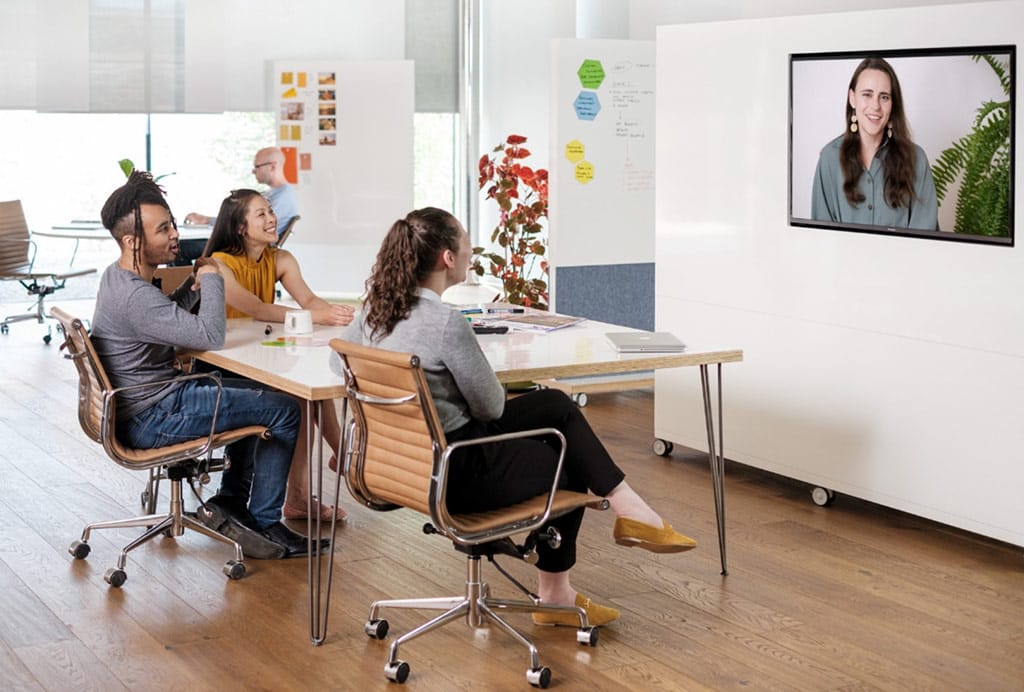
Best technology for hybrid meetings and collaboration spaces at the Workspace Design Show 2024
Take collaboration to a new level with next generation AV technology in a mobile unit. Bespoke mobile collaboration wall designer and manufacturer Logovisual will team up with international audiovisual experts and innovators AVEX to demo the latest technology to engage dispersed team members in collaborative workshops and meetings.
Join us at the Workspace Design Show, 27th – 28th February at the Business Design Centre, London on stand C1 for a short drop-in demo running daily at 11am and 2pm. See the latest additions to our range of space creation dividers and furniture elements designed to empower teams to create and adapt their own collaboration spaces, and call by any time to discuss your specific hybrid meeting requirements and solutions.
Wissam Choucair, MD of AVEX commented: “As we navigate the evolving landscape of modern work, the demand for adaptable collaboration spaces has never been greater. By seamlessly integrating AV solutions into mobile furniture, we can craft an immersive experience that effortlessly connects remote colleagues and clients. This innovation is pivotal in creating the perfect environment for the dynamic nature of hybrid offices. “
Mark Atherley, Business Development Manager at AVEX added: “As more employees embrace a hybrid work model, there is a greater need for collaboration and immersive technologies that allow for the best hybrid interactions and support both remote and in-person tasks and workstyles.
“Distractions allowed by poor acoustics are a major challenge, particularly as the office becomes noisier with increased collaboration between in-person and remote workers.
“Technology can make or break a hybrid work model and incorporating the best collaboration technology into spaces that are well-designed for hybrid interactions is now considered a must have.”
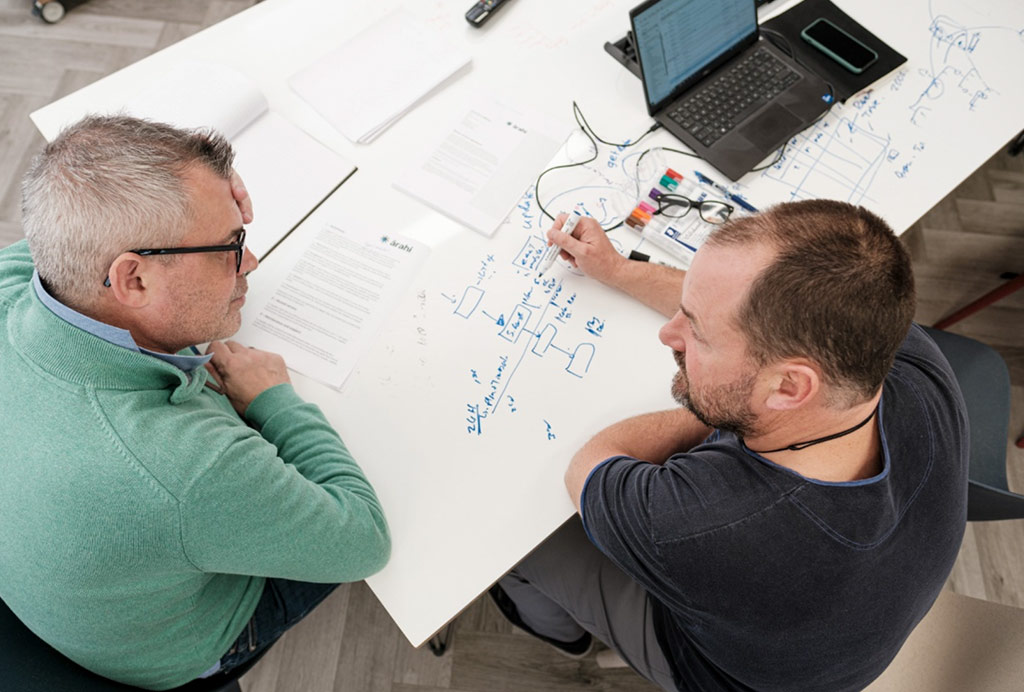
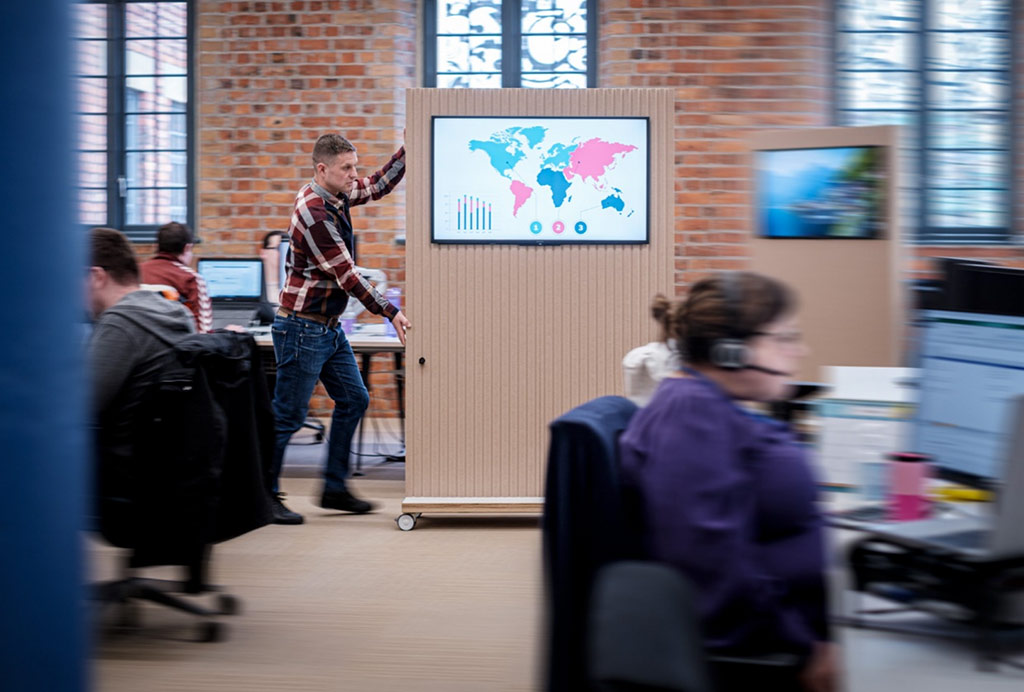
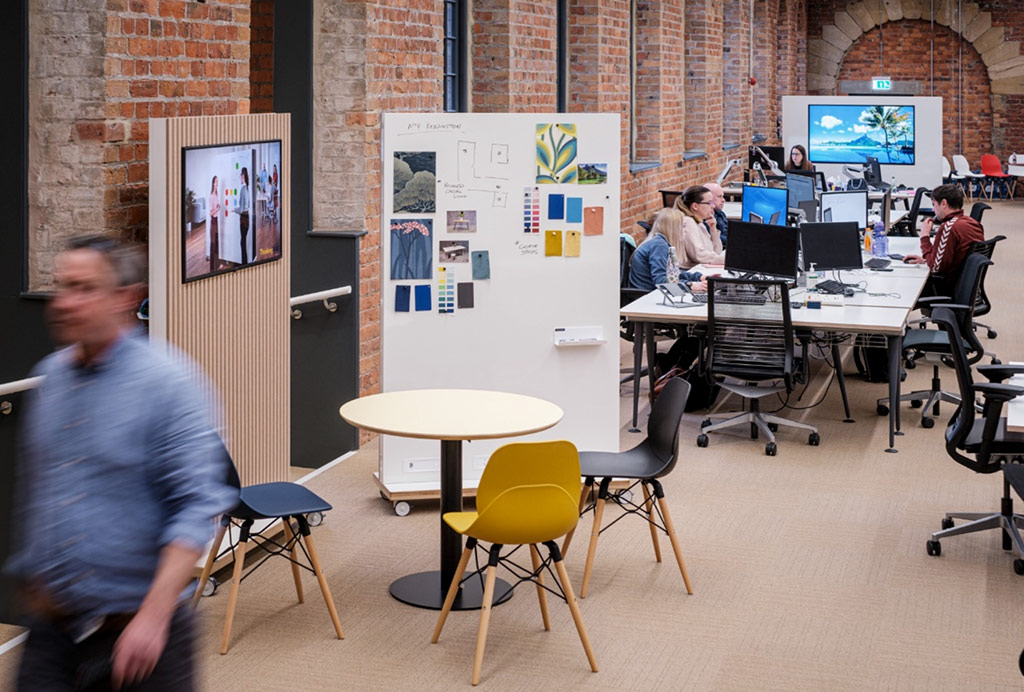
The ThinkingWall® range from Logovisual has been created to allow individuals and teams to create the right space within their ecosystem based on the task required and where they feel most productive.
Remove barriers to remote collaboration with BYOD (bring your own device) and BYOM (bring your own meeting) technology. Make connections anywhere using plug and play meeting solutions in mobile media walls that can move to any available space.
AVEX has provided audiovisual solutions to meet the evolving needs of teams for over 30 years. AVEX is headquartered in the Netherlands and has subsidiaries in Belgium and the UK. Logovisual are the creators of ThinkingWall®, a system of multifunctional mobile walls to divide space and define work zones.
Invigorating Modern Workspaces: Insights from Bex Moorhouse at the Workspace Design Show
The upcoming Workspace Design Show in London, scheduled for 27 - 28 February, will be packed with insights and innovations on workplace interiors. Among the many speakers scheduled to attend is Bex Moorhouse, the Founder of Invigorate Spaces. Read her perspectives on how modern offices are adapting to the evolving needs of the workforce.
How do you see offices providing focus spaces, spaces that allow for reduced distraction and high concentration?
Post pandemic, we have seen hybrid working and unassigned seating sky rocket, which in some cases has left a very noisy open-plan floor plate. Latest statistics also suggest that 15-20% of the UK workforce is Neurodivergent, so it is clear that quiet spaces are essential in the modern workplace. Mixing up these types of quiet spaces is really important, from library style spaces (with desks, monitors and importantly no calls/teams/zoom etc.), to more relaxed den style spaces where people can just decompress from the day and think. Adding plants, tactile wall fabrics, music and dimmable lightening can also really supercharge the impact of these spaces.
Our theme this year is ‘Bloom: exploring the thriving ecosystem of work life.’ How do you see offices ‘blooming’ in current times?
With every employee now effectively “visiting” their own workplace, offices need to do more than just provide a space to work. The workplace now becomes a canvas for experiences and culture to be layered on top. It’s about the feeling that your employees get when they come to the workplace and ensuring that with every visit they see an enhancement in their performance not in their productivity. Hotelification of workspaces, supports this bloom, curating the coffee to the conversation, all leaves a lasting positive experience, which means returning isn’t mandated, as it just happens naturally.
WDS Amsterdam Featured On Startups Magazine
Workspace Design Show featured on Startups Magazine. Read the release here.
WDS Amsterdam Featured On Workplace Insight
Workspace Design Show featured on Workplace Insight. Read the release here.